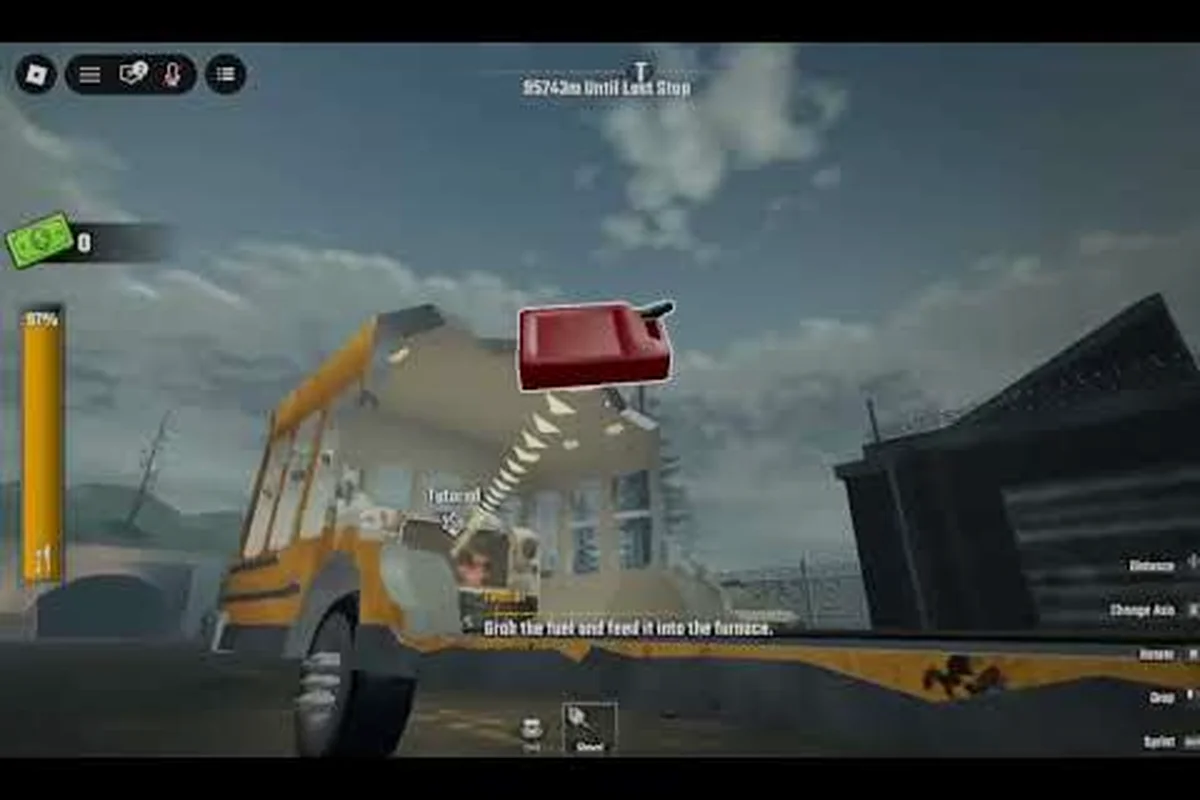
Last Stop mobile controls mirror the PC action set almost one-to-one, so touch players tap, hold, and drag through the same scavenge-sell-build loop without losing speed. Knowing which finger does what on a phone screen decides whether you finish the bus, clear the route, or run out of fuel halfway through. Below is the touch layout, the inventory taps that matter most, and a tested cash plan for short phone sessions.
The game launched in August 2026 and has cleared 21 million visits, with servers holding up to 25 players and frequent beta patches rolling through the autumn of 2026, according to community walkthroughs. That momentum is one reason a clean touch layout matters: more players are queuing on phones than ever, and most of them are running the same early-loop grind. If you are still getting your bearings, the broader Last Stop Roblox guide covers the wider survival basics before you optimize anything.
How Last Stop Mobile Controls Map to PC Actions
Touch inputs in Last Stop are not a watered-down version of the keyboard set. They are direct re-bindings of the same seven core actions that PC players use, which means any muscle memory you build on mobile transfers when you later play on a laptop or desktop. Community testing on the closed beta and on live servers shows the following mapping holds across the vast majority of touch sessions.
The Seven Core Touch Actions
Every meaningful interaction in the loop — grabbing loot, equipping a weapon, dropping junk, reloading, opening your bag, inspecting a stat, and placing a build piece — is reachable from one of these seven inputs. That is why most players memorize the layout in under an hour.
| PC Action | Touch Equivalent | Where It Sits on Screen | Common Use |
|---|---|---|---|
| Click (LMB) | Tap | Anywhere on the world view | Grab loot, shoot, interact with NPCs |
| Z (place/attach) | Hold + drag | Build-mode cursor | Drop a build piece on the bus or terrain |
| E (equip/use) | Tap (item bar) | Lower-right item bar | Equip weapon, eat, heal, or use held item |
| Q (drop) | Long-press | Held-item icon | Drop an item from your hand or bar |
| R (reload) | Tap (weapon icon) | Weapon slot in the item bar | Reload a gun mid-combat |
| TAB (inventory) | Tap (bag icon) | Top-right or center-right | Open the inventory grid |
| Y (inspect) | Tap (item icon) | Inside inventory or bar | Inspect a held item's stats and rarity |
The layout stays identical whether you run iOS, Android, or a tablet, and community walkthroughs on the same set confirm the seven inputs above are the only ones you need during a full run — from your first loot grab in the safe zone to the final supply drop on day seven. Because no gesture opens a sub-menu or pulls up a radial wheel, you never lose thumb placement on the shoot or build inputs, which is what makes the mobile inventory grid feel just as fast as the PC TAB swap loop once the muscle memory locks in.
Thumb Placement and Screen Zones
Most players settle on a two-thumb grip within the first few rounds. The left thumb stays on the movement stick in the lower-left corner, while the right thumb cycles between the action buttons, the item bar, and the inventory bag. Two soft rules keep this comfortable:
-
Keep your right thumb within the lower-right quadrant unless you are actively opening the bag.
-
Use the long-press for drops only when standing still, because it triggers a context menu and can throw your aim off mid-fight.
Players running a bus-heavy build often add a second finger to the build-mode cursor during placement, which shortens a wall raise noticeably on a phone screen. The trick works because the build cursor accepts simultaneous input while your right thumb stays parked over the action buttons, so you can fire the next step (floor, ramp, edit) the instant the ghost turns blue without lifting off the shoot icon. On devices with 90 Hz or 120 Hz touch sampling, the window tightens further, letting aggressive players stack a full 3×3 defensive shell in a brief window while the audio cue for material spend is still ringing.
Inventory Taps: Reading Last Stop on a Small Screen
Touch inventory behaves like a shrunk version of the PC grid, but the core logic is unchanged. Every lootable object has a rarity tag, a sell value, and a stack count, and the bag icon on touch opens the same four-tab UI that keyboard players see. Knowing which tab to flick to is the difference between clearing a run with spare ammo and walking away with a half-empty bag. For a deeper dive into the storage and sell-back flow, the Last Stop inventory management guide walks through the full grid in detail.
Rarity Tiers and Their Touch Icons
The rarity system uses a color band on each item icon, and the band is the fastest read on a phone screen. The list below tracks how those colors translate to cash and combat value, based on community-reported drops.
| Rarity Tier | Icon Color Band | Sell Value Range (per stack) | Combat Use |
|---|---|---|---|
| Common | White | 5–20 cash | Scrap or starter filler |
| Uncommon | Green | 25–60 cash | Early weapon rolls |
| Rare | Blue | 80–150 cash | Mid-run upgrades |
| Epic | Purple | 200–400 cash | Late-run carry pieces |
| Legendary | Orange | 500+ cash | Boss-loot territory |
Touch players can read the color band in roughly half a second because the icons sit on a high-contrast background, so the rarity check rarely slows the loop. If a stack is below the value you need to refill a key upgrade, drop it at the next stop instead of hauling it forward.
Stack Limits and Bag Pressure
The inventory grid holds a fixed number of slots per category, and overfilling it is one of the most common reasons mobile players lose loot to a death. The numbers below reflect the standard cap reported by community testing on the public beta branch.
| Category | Slot Cap | When It Fills First | Fastest Clear |
|---|---|---|---|
| Weapons | 6 slots | Mid-run after a Rare drop | Sell duplicates, keep the highest-rarity piece |
| Ammo | 8 stacks | Late combat waves | Sell excess stacks at the next stop |
| Materials | 12 stacks | Scavenge-heavy runs | Drop wood and scrap, keep fuel and metal |
| Consumables | 6 slots | Healer build | Eat low-rarity food, hoard med kits |
| Special | 4 slots | Boss-loot runs | Never drop; use the Vault between runs |
A full bag on touch is awkward because long-pressing an item while a zombie is closing in is a death sentence, so the fix is simple: sell at every stop, not just at the bus. On mobile the sell icon sits inside the same tap-target as the long-press hold, which makes mid-combat clearing a real risk during waves 4-6 when horde density peaks; opening a sell menu at a roadside stop takes a short window and clears 3-5 slots, which is enough room to keep looting Rare drops without dropping a stack of fuel or med kits to make space.
Earning Cash Fast on Touch: The Scavenge-Sell-Build Loop
Cash is the engine of every run, and on mobile the fastest way to bank it is a tight scavenge-sell-build cycle. The plan below is the same one that keyboard players use, trimmed for phone sessions where the average run is shorter and you have less margin for wasted ammo. The community walkthroughs from BlaxieBLOX's Noob to Pro video describe this loop as the backbone of early progression, and touch players can run it without changing the cadence.
Stage 1: Scavenge With a Route, Not a Wander
A wandering scavenge wastes time and fuel, which is the single most expensive mistake on mobile. The fix is a fixed two-stop route per run: one roadside shack, one abandoned building, and then a beeline back to the bus. Each leg of the route has a target, and the targets below are the cash-per-minute leaders.
| Scavenge Source | Cash per Clear Band | Avg Time on Mobile | Best Stop Tier |
|---|---|---|---|
| Roadside shack | Low | About a minute | Early run |
| Abandoned house | Moderate | A minute or more | Mid run |
| Gas station | Moderate | About a minute | Fuel priority |
| Warehouse | Moderate | A minute or more | Late run |
| Boss arena chest | Moderate | more than a minute or more | Endgame only |
Squeezing the scavenge phase under two minutes per leg is the single biggest cash multiplier on touch controls, because shorter legs translate directly into more sell trips and more bus upgrade tokens banked per hour. A run that averages 1:45 versus 2:15 across ten rounds costs you roughly three full sell cycles — about 600–900 cash on a mid-run warehouse clear — which is exactly the margin between a Tier 2 and Tier 3 bus before the gas station rotation locks you out. Treat 1:50 as the ceiling, not 2:00, and use the on-screen stamina cooldown ring to skip the optional looting animation at the abandoned house once your inventory slots are half-full.
Stage 2: Sell at Every Stop, Not Just the Bus
Most phone players batch all sales at the bus, which leaves cash on the ground when they die. The better play is to sell at every stop, even if the stack is small, because the bank at a roadside vendor behaves like a passive safety deposit that travels with your run. Mobile controls make this fast: tap the vendor, drag the stack into the sell window, and confirm with one thumb without leaving the route's tap-to-move rhythm. Two reasons drive this:
-
A small sell at a roadside stop frees a bag slot for the next scavenge leg, which keeps your inventory from filling up.
-
Banked cash at a stop is safe cash — it survives even if the bus gets overrun, because the stop vendor holds the balance for the run.
The touch-friendly rule of thumb is to sell any stack worth less than the cost of your next weapon upgrade. Anything above that line, hold until the bus. A full guide to this money loop is covered in the broader Last Stop inventory and selling guide, which expands on the per-stop sell math.
Stage 3: Spend on Bus Upgrades First
Once the cash is banked, the question is what to spend it on. On mobile, the answer is almost always the bus before the weapon, because a stronger bus means more stops per run, which means more cash per hour. The priority list below is the order most touch players settle on after a few runs.
| Upgrade Tier | What to Buy First | Cash Threshold | Why It Pays Off |
|---|---|---|---|
| Starter sword | 150 cash | Floor | Stops ammo waste on trash mobs |
| Fuel chest | 250 cash | Floor | Extends route by 1–2 stops |
| Spare tire | 200 cash | Floor | Prevents wheel-blowout wipes |
| Sleeping bag | 300 cash | Mid | Skips dangerous night waves |
| Sack (corpse sell) | 200 cash | Mid | Adds zombie-body cash income |
| Vault page 1 | 500 cash | Mid | Saves gear on death between runs |
| Armor (tier 1) | 400 cash | Late | Survives boss contact |
| Bus engine | 800 cash | Late | Higher top speed, more stops per hour |
The pattern is clear: every upgrade under 500 cash pays for itself within one or two runs, while the engine and armor tiers need a stable cash flow first. Touch players who follow this ladder typically hit a full bus kit in around six to eight runs.
Touch-Specific Survival Habits
The control set is only half of the mobile story. The other half is how you move your thumbs during combat, which is where most phone players bleed health and ammo. The habits below are the ones that show up in every high-clearance touch run.
Tap Discipline in Combat
Finger fatigue is real on small phone screens, and it shows up fast in Last Stop's horde runs as missed taps on the shoot button, dropped weapons mid-swap, and reloads that fire a frame too late when a Screecher closes the gap. Three rules keep the hands fresh across a full shift, and each one targets a different fatigue failure point:
-
Tap, do not mash, the action buttons. Each tap has a small cooldown, and mashing just queues inputs that fire after the fight is over.
-
Keep the build-mode cursor off unless you are actively building. A stray hold-and-drag while running throws your movement stick into a spin.
-
Use the long-press drop only on stationary items. Dropping ammo mid-fight is a common reason touch players run out of bullets before the wave ends.
Comms With Bus Crew
If you are running a four-player bus crew, two chat habits save runs: pinging the bus driver before you jump off a scavenge site, and tapping the inspect icon on any Rare or better loot so the crew knows what to prioritize before the bus timer expires. Both gestures live inside the mobile controls overlay and cost less than a second, but they keep the vehicle from idling or rolling away while half the squad is still inside a building. On bus routes with tight schedules, that small coordination habit is the difference between banking the haul and watching the driver abandon the stop.
-
Ping a stop before you disembark, so the bus does not leave the scavenger behind. The tap-to-ping button sits next to the bag icon.
-
Mark Rare or better drops with a quick tap on the inspect icon, so the crew knows what to grab before the wave closes in.
The same ping and inspect rules apply whether you run with a full four-player bus crew or solo, but the crew path is where they save the most cash because the bus can keep moving while you scavenge, costing zero downtime on the departure timer and preserving any Rare drops the loot inspector flagged on the mobile overlay.
Advanced Mobile Loops: Solo Cash Runs
Solo runs on mobile are tighter than crew runs, but they are also the cleanest way to stack cash without splitting loot. The plan below is what solo phone players use when they want to bank 1,000+ cash in a single run, and it leans on the Last Stop selling loop playbook that the community has refined over the autumn 2026 patches.
Run Plan: One Bus, Three Stops, Two Sales
A tight solo run looks like this on touch controls: the bus is steered with the left virtual stick while the right stick controls the mounted weapon, so your left thumb handles the throttle-brake-rev drift combo and your right thumb pivots the turret. Inventory swaps live on a swipe-in radial on the right edge, meaning you can toss a Common stack to a buyer at a red-light stop without ever lifting off the gas pedal, and the dodge-roll button sits just above the brake for tap-to-evade when a zomboid lunges at the windshield.
-
Leg 1 — Roadside shack to gas station. Grab any weapon you find, refuel the bus, sell Common and Uncommon stacks. Target: 200 cash banked.
-
Leg 2 — Abandoned house to warehouse. Skip the boss arena, focus on a clean scavenge. Sell any Rare drop worth less than 400 cash. Target: 400 more cash banked.
-
Leg 3 — Boss arena or back to bus. If your bus and gear can handle a boss, push for the chest. If not, sell everything and bank the cash at the final stop. Target: 400+ more cash.
That sequence banks roughly 1,000 cash in a 12–15 minute run, which is enough for one full bus upgrade and a starter weapon swap. On the touch layout, the Swipe-In radial edge on the right lets you offload a Common stack to a buyer at a red-light stop without lifting off the gas pedal, while the dodge-roll button sits just above the brake so you can tap-to-evade when a zomboid lunges at the windshield — meaning every 200 cash chunk dropped at a light stop translates directly into Tier-2 bus armor before Leg 2's warehouse scavenge.
Common Solo Mistakes on Touch
-
Over-scavenging the warehouse. The warehouse is the highest-cash leg, but it also pulls zombies, so a solo touch player should cap the warehouse at a minute or more and bail.
-
Forgetting the fuel chest. A solo run without a fuel chest ends in the middle of leg 2, which means losing the bag and the cash. The Last Stop bus fuel breakdown covers the fuel math in detail.
-
Hoarding low-rarity ammo. Ammo stacks that you will never use are dead weight on a small bag, so sell them at the next stop and re-buy at the bus.
Closing Notes on Touch Play
Last Stop mobile controls are not a compromise version of the PC layout; they are a direct re-binding of the same seven actions, and that makes the phone version a fully viable way to run the loop end to end. Combine the seven-touch action set with a tight scavenge-sell-build cycle, sell at every stop, and spend on bus upgrades first, and the average touch run banks 800 to 1,200 cash by the final stop. The same plan works on iOS, Android, and tablet, and it is the same plan that high-clearance PC crews use, just with a smaller screen and two thumbs.
Frequently Asked Questions
Do Last Stop mobile controls work the same on iOS and Android?
Yes, the touch layout is identical across iOS and Android because the game binds the same seven actions to the same on-screen zones. The only difference is the device's natural grip, so tablet players tend to use a third finger on the build-mode cursor while phone players stick to a two-thumb setup.
What is the fastest way to make money on mobile?
The fastest way to make money on mobile is a tight two-stop scavenge route with a sell at every stop, because shorter legs mean more sell trips and more banked cash per hour. Holding the scavenge phase to under two minutes per leg is the single biggest multiplier for a phone session.
Should I sell items at every stop or only at the bus?
You should sell at every stop, not just at the bus, because stop-vendor cash is safe cash that survives a wipe. The touch-friendly rule of thumb is to sell any stack worth less than your next weapon upgrade and hold the rest for the bus.
How many inventory slots does the mobile bag have?
The mobile bag has the same slot caps as the PC grid: 6 weapon slots, 8 ammo stacks, 12 material stacks, 6 consumable slots, and 4 special slots. Selling at every stop is the cleanest way to keep the bag from filling up mid-run.
Can I use a controller instead of touch on mobile?
The game does not officially support controller input on mobile, so touch and the on-screen button overlay are the only inputs. PC and console players who want a controller-style feel should run the game on a platform that supports external gamepads, while phone players stick with the seven-action touch layout.